
Can You Plaster Over Painted Walls?
If you’ve been wondering whether you can plaster over painted walls, the short answer is yes, but it’s not as straightforward as simply rolling up your sleeves and getting started. The condition of the existing paintwork, the type of paint on the wall, and the preparation you put in will all determine whether the job holds up or causes problems further down the line. Get it right, and you’ll end up with a smooth, fresh surface ready for decorating. Get it wrong, and you could end up with plaster that cracks, peels, or falls away within months.
It Starts With the Condition of the Paint
Before you try to plaster over painted walls, take a proper look at the wall you’re working with. Run your hand across it, press gently in a few spots, and check whether the paint is firmly bonded to the surface beneath.
If the paint is in good condition, no bubbling, no peeling, no flaking, then you have a solid enough base to work with. Sound, well-adhered paint can actually hold plaster reasonably well once the right preparation is done. The problem comes when the paint underneath is already giving way. If it’s lifting in places, your new plaster will only be as stable as that loose layer beneath it, which means it’s likely to fail.
Old or heavily damaged paint should be removed before you attempt to skim the wall. You can strip it back using a scraper or a chemical paint stripper, and then give the wall a thorough clean before moving on. It’s extra work upfront, but it saves a much bigger headache later.

Watch Out for Silk and Gloss Paint
Not all painted surfaces behave the same way when you’re trying to plaster over painted walls. Matt emulsion tends to give plaster a reasonable amount to grip onto. Silk and gloss paints are a different story entirely.
These finishes are far smoother and have very little suction, which means plaster simply slides off them rather than bonding properly. If you’re dealing with silk or gloss, the wall will need more aggressive preparation, scoring the surface with a Stanley knife in a cross-hatch pattern, or using a coarser sandpaper to key it up before applying any bonding agent.
Preparation Is the Most Important Step
Clean the wall down – Wash with sugar soap and water to remove grease, dust, and grime. Any contamination left on the surface will affect adhesion, so give it a proper scrub and let it dry fully before moving on.
Scrape back loose paint – Go over the wall carefully and remove anything that’s starting to lift. Also tap the wall as you go, if it sounds hollow in places, the plaster beneath has blown and will need cutting out and making good before you skim over it.
Apply a bonding agent – PVA mixed at three parts water to one part PVA is the standard approach, it creates a bond between the painted surface and the new plaster and slows down suction so the plaster doesn’t dry too fast. Apply it evenly and plaster while it’s still slightly tacky. For trickier surfaces, a gritted stabilising primer or a product like Thistle Bond It will give the plaster a more reliable mechanical key.
Scrim any cracks – Hairline cracks should be taped with scrim before you skim, and any larger holes filled and left to set. If you skip this, cracks will show through in the finished surface.
Applying the Plaster
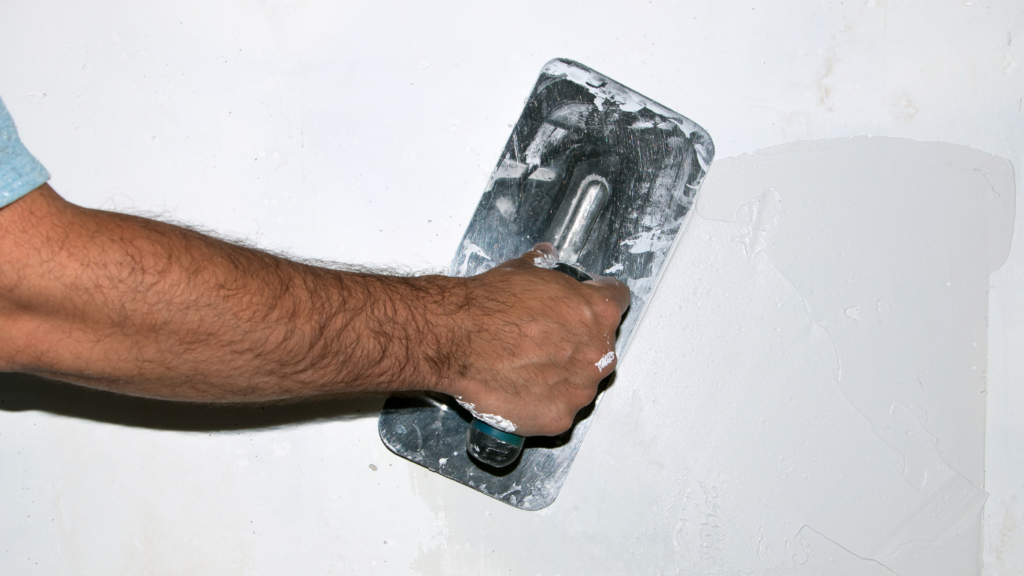
Once the wall is properly prepped, you can think about plastering over painted walls in terms of the actual application. Most professional plasterers will apply two coats of multi-finish plaster. The first coat is applied and left to firm up for around seven to ten minutes before being flattened with a trowel. The second coat follows after roughly fifteen to thirty minutes, and is then flattened and polished to achieve the smooth finish.
The key throughout is keeping a wet edge and working consistently, rushing the process or working in sections without overlapping properly will show up in the final result.

Allow Enough Drying Time
Once you’ve done the work to plaster over painted walls, don’t rush straight into decorating. New plaster needs at least a week before you paint over it, and can take up to six weeks to fully cure depending on the thickness of the coat, the temperature, and how well ventilated the room is. Painting too soon traps moisture in the plaster, which leads to peeling and means the work will need doing again.
When Plastering Over Paint Isn’t the Right Option
Sometimes the most practical solution isn’t to skim over what’s already there. If the existing wall surface is heavily damaged, badly contaminated, or the old plasterwork beneath the paint has failed across a large area, overboarding is often the better route. This involves fixing a layer of plasterboard over the existing wall and then skimming that, it gives you a clean, stable base and avoids the risks that come with working over a compromised surface.
It’s also worth noting that wallpaper is a different matter entirely. Plastering directly over wallpaper is not recommended. The moisture in the plaster causes the adhesive to soften and the paper can lift, bubble, or detach, sometimes immediately, sometimes weeks later. Wallpaper should always be stripped back to bare plaster before any skimming work takes place.
Should You DIY or Call a Professional?
If you have some experience with plastering, know how to mix plaster to the right consistency, and can apply it evenly, then tackling a small area yourself is achievable. But it’s worth being honest about the skill level involved. Achieving a genuinely smooth, flat finish takes practice. Preparation mistakes are also hard to undo once the plaster is on, and fixing a failed skim is more disruptive and more expensive than getting it right first time.
For anything larger than a small patch repair, or for walls with complicated surfaces or existing damage, it’s worth getting a professional in to assess the job before committing to an approach.
Can You Plaster Over Painted Walls?
At Fullers Plastering, we’ve been working across Brighton, the South East, and London for over 20 years, covering everything from straightforward domestic skimming work through to specialist finishes and large-scale commercial projects. If you’re not sure whether to plaster over painted walls or take a different approach entirely, we’re happy to take a look and give you an honest assessment. Get in touch with our team today.