
How Long Does Screed Take to Dry
How long does screed take to dry? The short answer is longer than most people expect, and usually longer than the building programme allows for. A floor screed can feel hard enough to stand on within a day or two, but that tells you very little about whether it is dry enough to tile or lay flooring over the top. Get this wrong, and you risk lifting tiles, cupped floorboards and a repair bill that dwarfs the cost of waiting. This guide covers the realistic timings for each type of screed, what actually controls the drying, and how to know when the floor is ready for the finish to go down.
Why Screed Drying Time Matters
A freshly laid screed holds a large amount of water. Floor finishes and the adhesives under them do not cope well with that moisture trying to escape upwards after the floor is down. With tiles, trapped moisture can stop the adhesive curing correctly, which leads to tiles debonding or lifting and to salts and efflorescence showing in the grout joints. With timber and engineered wood, the boards take up moisture from a damp screed and cup, gap or lift. Impervious finishes such as vinyl, LVT and resin seal the moisture in against the screed, so they can blister or come away.
Tiling or laying a floor over a screed that has not dried is one of the most common causes of floor failures in new builds and extensions. The fix almost always means taking the floor back up and starting again, which costs far more than the few extra weeks of patience would have.
How Long Does Screed Take to Dry? The Honest Answer
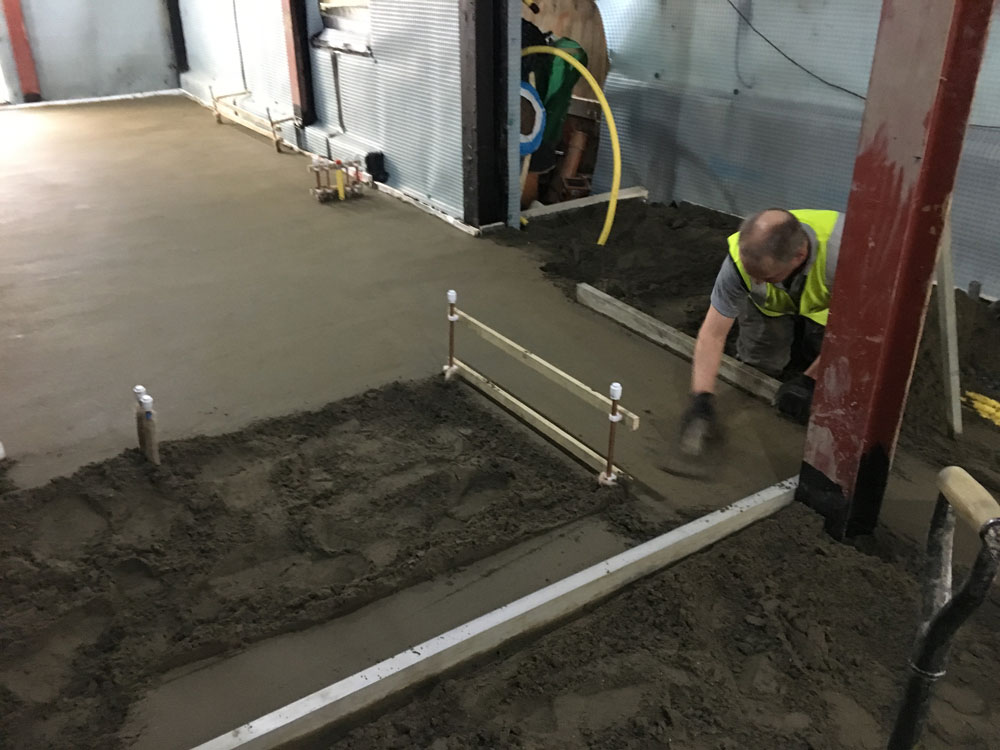
There is no single figure, because it depends on the type of screed and its thickness. There is, though, a well-established rule of thumb for traditional sand and cement screed: it dries at roughly 1mm per day for the first 50mm of thickness, then more slowly beyond that, often reckoned at around two days per additional millimetre.
Most domestic screeds are laid between 50mm and 75mm deep. At those depths, even in good drying conditions, meaning an air temperature near 20°C, decent ventilation and moderate humidity, you are looking at weeks rather than days before the floor is ready for a finish. Real rooms are rarely that kind, so treat the rule of thumb as a starting point rather than a promise.
It is also worth separating two things that often get confused. A sand and cement screed will usually take light foot traffic after 24 to 48 hours, but being firm enough to walk on is not the same as being dry enough to tile. The surface can feel solid while a lot of moisture is still held deep inside.
Drying Times by Screed Type
So how long does screed take to dry, type by type? A large part of the wait comes down to which screed has been laid.
Traditional sand and cement screed
The common choice for UK homes, made from sharp sand, cement and water. It is durable and can handle heavy loads, and it follows the rule of thumb above: roughly 1mm per day up to 50mm, then slower after that. At the depths most domestic floors are laid, you are looking at weeks rather than days in good conditions. It feels ready long before it is, which is exactly where people come unstuck.
Liquid (calcium sulphate or anhydrite) screed
Often used with underfloor heating because it flows to a level and gives good contact around the pipes. It is sometimes sold as a fast-track option, but its drying rate is similar to sand and cement: around 1mm per day up to 40mm, then roughly half that beyond. Even at typical domestic depths, a liquid screed can still need several weeks to reach a tileable moisture level.
Liquid screed also brings two extra jobs before tiling. First, the laitance, a weak chalky layer left on the surface as the screed cures, has to be sanded off by light abrasion, ideally about 5 to 7 days after the screed goes down, then vacuumed away. Second, a suitable primer for calcium sulphate screeds must be used. The primer forms a barrier that prevents a chemical reaction between the gypsum-based screed and ordinary cement-based tile adhesive, a reaction that can make tiles lift.
These screeds also dislike repeated wetting, so they are not used in wet rooms or outside. If you are not certain which screed you have, ask, because calcium sulphate screeds are not always easy to tell apart by eye.
Fast-drying and rapid screeds
Purpose-made rapid screed systems and modified mixes can be ready for floor coverings far sooner than standard screed, sometimes within days rather than weeks. Timings vary a great deal between products, so the manufacturer’s own figures are what you follow here, not any general rule.
Tiles, Wood and Vinyl: Does the Floor Finish Change the Wait?
The screed has to reach a safe moisture level for whatever goes on top, but some finishes are far fussier than others.
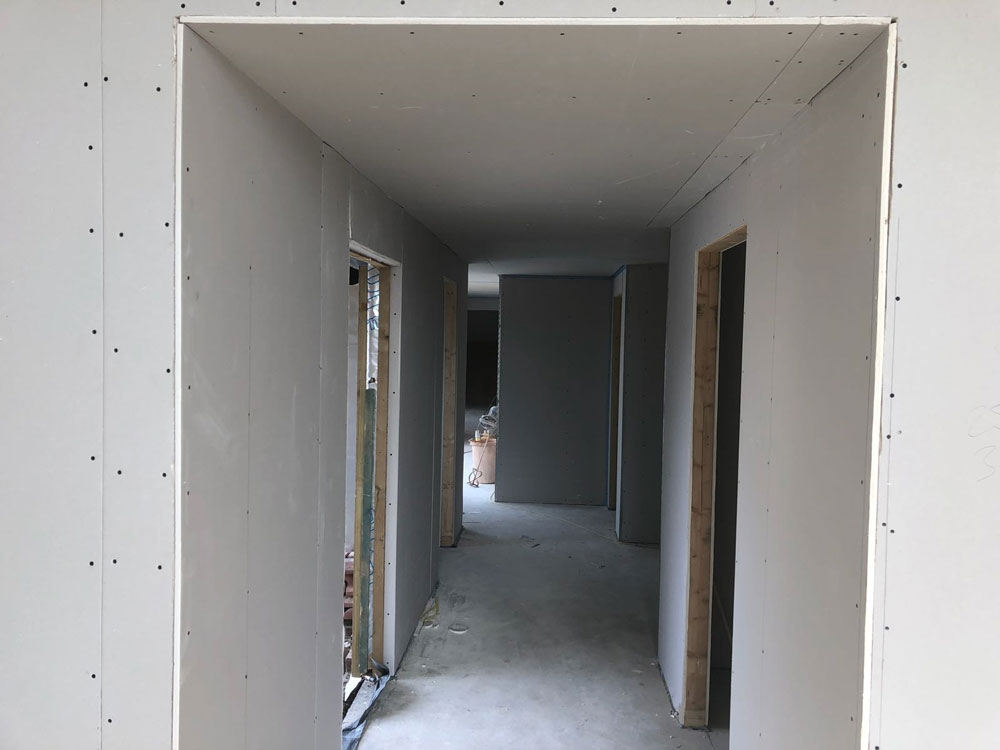
Ceramic and porcelain tiles fixed with cement-based adhesive need the screed below the moisture threshold or the bond suffers. Timber and engineered wood are the most moisture-sensitive of all, which is why wood is usually given the longest wait. Vinyl, LVT and resin are effectively impermeable, so they trap any remaining moisture and can blister if laid too soon. Carpet is the most forgiving, but it still should not go down over a wet screed.
As a rough guide, people often quote a minimum of around three to four weeks before tiling and six weeks or more before timber, but those are only guides. This is why how long screed takes to dry is really a question about moisture content, not a fixed number of days on the calendar.
How to Tell When Screed Is Actually Dry
Do not judge it by how the surface looks or feels. The recognised method in the UK is a relative humidity test using a hygrometer, in line with BS 8203. An insulated box is sealed to the floor and left in place, typically for around 48 to 72 hours, so the air inside reaches equilibrium with the screed. The humidity is then read.
For moisture-sensitive floor coverings, the reading should be at or below 75% relative humidity before the finish goes down. For calcium sulphate screeds, that equates to roughly 0.5% moisture content by weight, while more permeable finishes can tolerate a little more. Handheld surface meters are useful for spotting damp patches, but on their own they are not accepted as proof the floor is dry. Testing is the only reliable way to answer how long screed takes to dry on your particular floor. If there is any doubt, the people who laid the screed should be able to confirm the drying period for the depth they put down.
What Slows Screed Drying Down
Thickness is the single biggest factor, and the rule of thumb shows why every extra millimetre over the threshold adds disproportionately to the wait.
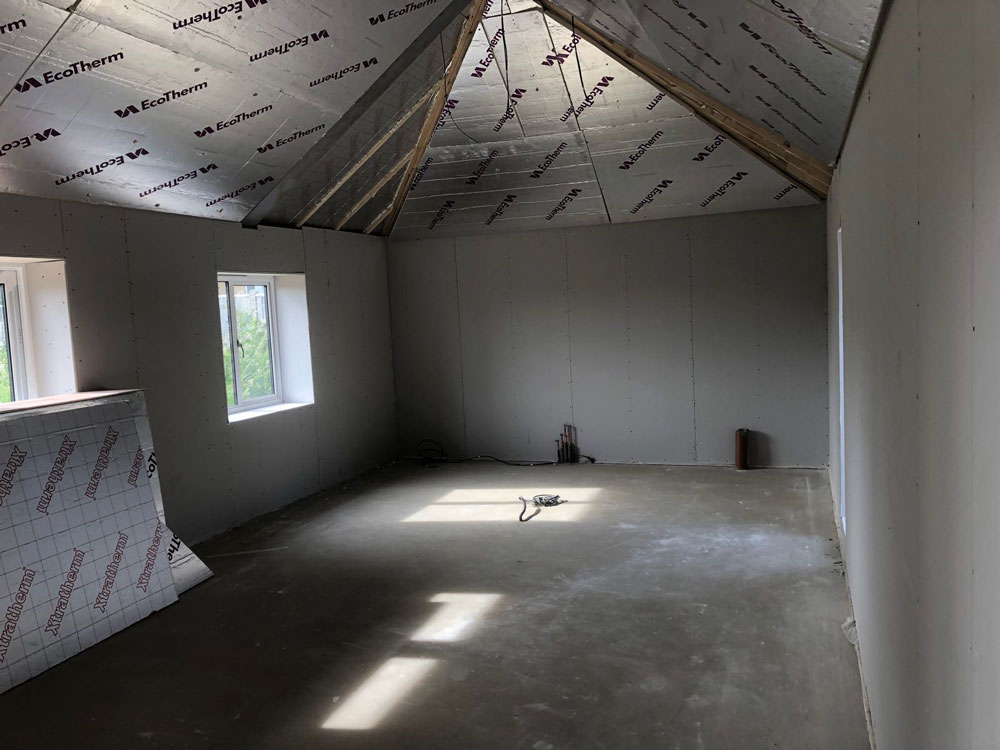
After that, conditions decide everything. Warm rooms dry faster, while cold weather slows things right down, so a screed laid in an unheated room in January is a very different prospect from one laid in a warm, airy room in summer. Moving air carries moisture away, so ventilation helps, whereas a sealed-up room holds the damp in. High humidity slows evaporation further.
One word of caution. Drying a screed too fast, by blasting heat at it early or hard, can make it crack or curl at the edges. Steady conditions are what you are after: open the windows, keep the room above freezing, and once the screed is a week or so old you can bring in background heat gradually.
Underfloor Heating Adds a Step Before You Tile
If there is underfloor heating in the screed, the heating itself is used to help dry and condition it, but the process has to be gradual. The usual approach is to leave the screed to cure for at least seven days, then commission the heating by raising the temperature in small steps over a couple of weeks up to its maximum, holding it, and then bringing it back down before any moisture test and tiling.
Once the tiles are laid, the heating is normally left off for around 14 days, then increased gently, often quoted at about 5°C per day, up to the working temperature. Turning underfloor heating up too soon, either side of tiling, is a frequent reason tiles crack or lift. The screed and heating manufacturers’ commissioning instructions take priority over any general timing.
Can You Speed Up Screed Drying?
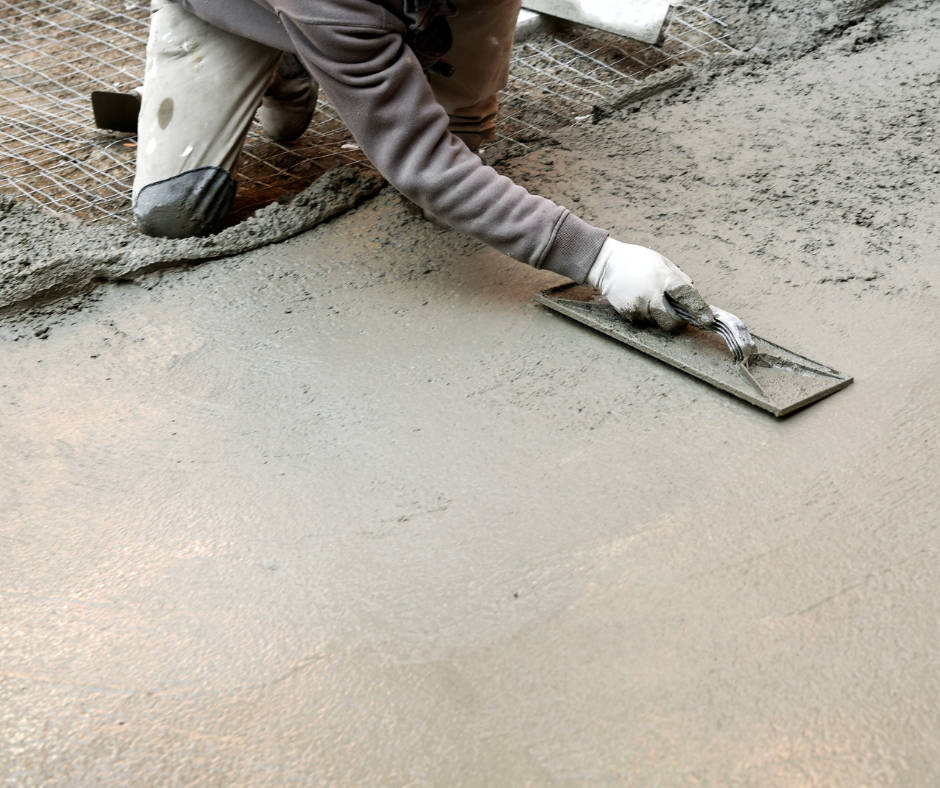
To a point, yes. The safe options are to keep the room warm and ventilated, run a dehumidifier once the screed has had time to cure, and choose a fast-drying screed system at the outset if the programme is tight. Where a floor genuinely cannot be left long enough to dry out, a surface damp-proof membrane or a moisture-suppressant primer can sometimes be used to seal residual moisture in before an impermeable finish goes down, but that is a specialist decision taken on the back of a moisture reading, not a default. What you should never do is lay the floor early and hope, or force-dry a standard screed with fierce heat.
Fullers Plastering carries out screeding across Sussex, the South East and London, including standard ready-mix and site-mix screeds, flowing screeds, and quick-drying systems such as Ardurapid where a job is on a tighter timescale.
How Long Does Screed Take to Dry?
How long does screed take to dry? It comes down to the type of screed, its thickness and the conditions it dries in, but the realistic picture for a standard screed is weeks rather than days, and a moisture test is what confirms the floor is ready. Fullers Plastering is a family-run firm based in Brighton, with around 40 tradesmen working across Sussex, the South East and London and over 20 years of plastering, rendering and screeding behind it.
Fullers Plastering carries out standard ready-mix and site-mix screeds, flowing screeds, and quick-drying systems such as Ardurapid for jobs on a tighter schedule. For advice on the right screed for your project, or to get a job booked in, call Fullers Plastering on 01273 686 368 or get in touch with the team.
Frequently Asked Questions
How long after laying screed can you walk on it? Most sand and cement screeds take light foot traffic after about 24 to 48 hours. The screed is still curing at that point, so heavy loads, trolleys and furniture should stay off it. Being able to walk on it does not mean it is dry enough to tile.
Can you tile directly onto screed? Yes, once the screed is sound, clean and dry enough, tiles can go straight onto it with a suitable adhesive. Liquid calcium sulphate screeds first need the laitance sanded off and a suitable primer applied. A self-levelling compound is not always needed, but it helps where the surface is uneven.
Is liquid screed faster to dry than sand and cement? Not necessarily. It often sets and can be walked on sooner, but its drying rate is similar, roughly 1mm a day up to 40mm and slower after that. A typical liquid screed can still take several weeks to reach a tileable moisture level.
Do you need to prime screed before tiling? Cement-based screeds are usually primed to control suction and improve the bond. Calcium sulphate screeds must be primed with a suitable barrier primer after the laitance has been removed to prevent a reaction between the gypsum screed and cement-based adhesive.